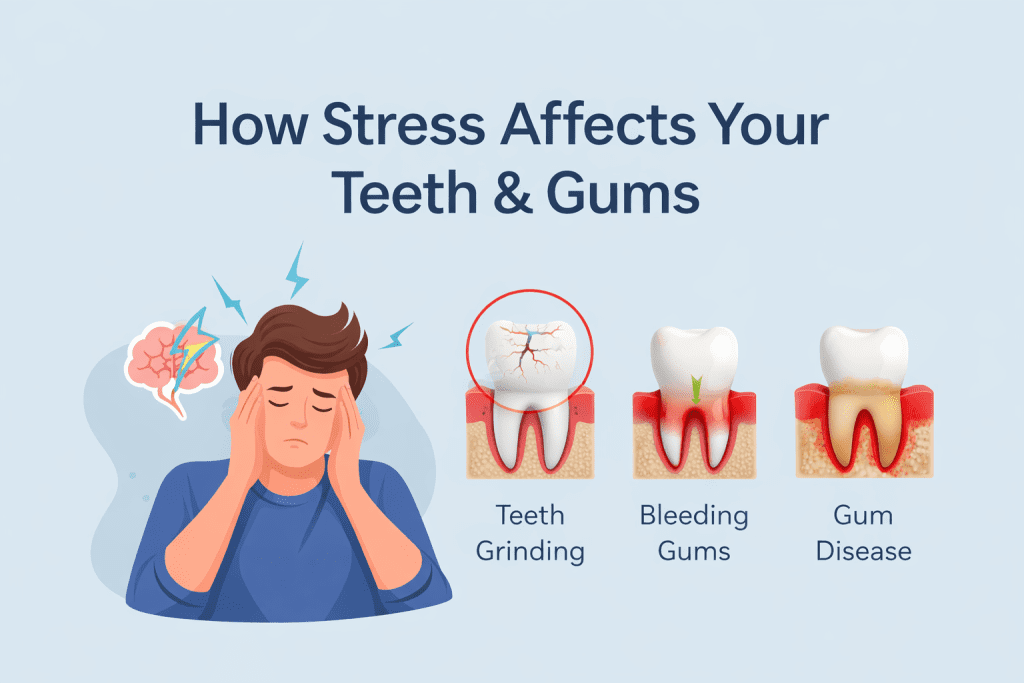
How Stress Affects Your Teeth & Gums
Stress doesn’t just affect your mind — it silently impacts your oral health too.
Many dental problems patients face today have stress as a hidden root cause, but most people never connect the two.
In this blog, we’ll explain:
How stress damages teeth and gums
Common dental problems caused by stress
Warning signs to watch for
How to protect your oral health
The Hidden Link Between Stress & Oral Health
When you’re stressed, your body releases hormones like cortisol.
These hormones:
Weaken immunity
Increase inflammation
Reduce saliva production
All of this directly affects your teeth, gums, and jaw muscles.
Dental Problems Caused by Stress
1. Teeth Grinding (Bruxism)
One of the most common stress-related dental problems.
Signs include:
Flattened or chipped teeth
Jaw pain
Headaches
Tooth sensitivity
Many people grind their teeth during sleep without knowing it.
2. Jaw Pain & TMJ Disorders
Stress causes jaw muscles to remain tense.
This can lead to:
Clicking sounds while opening mouth
Pain while chewing
Difficulty opening mouth fully
3. Gum Disease & Bleeding Gums
Stress weakens your immune system → bacteria grow faster → gums get infected.
Stress-related gum issues include:
Swollen gums
Bleeding while brushing
Bad breath
4. Mouth Ulcers & Sores
Stress often triggers painful mouth ulcers.
Though not dangerous, they:
Make eating painful
Take longer to heal under stress
5. Dry Mouth (Low Saliva Production)
Stress reduces saliva flow.
Low saliva causes:
Higher cavity risk
Bad breath
Faster plaque buildup
Saliva is your mouth’s natural defense.
Warning Signs You Shouldn’t Ignore
Watch out for:
Sudden tooth sensitivity
Jaw stiffness in the morning
Frequent headaches
Bleeding gums
Chipped teeth without injury
These could be stress-related.
How to Protect Your Teeth from Stress Damage
1. Manage Stress Actively
Regular exercise
Proper sleep
Meditation or breathing exercises
Reducing stress = reducing dental damage.
2. Use a Night Guard (If You Grind Teeth)
A custom night guard protects teeth from grinding damage.
3. Maintain Excellent Oral Hygiene
Brush twice daily
Floss regularly
Use mouthwash
Stress makes hygiene more important, not less.
4. Stay Hydrated
Drink enough water to prevent dry mouth.
5. Visit Your Dentist Regularly
Early signs of stress-related damage can be detected before they worsen.
Conclusion
Stress silently affects your teeth and gums, often without obvious symptoms at first. Ignoring stress-related dental problems can lead to severe damage over time. With proper care, stress management, and timely dental visits, you can protect your smile even during stressful phases of life.
Ekdantam Dental Clinic focuses on preventive and comprehensive dental care to help patients maintain healthy smiles — inside and out.